Monday, January 20, 2014

The logic of emotional discovery


Book: The Curious Incident of the Dog in the Night-time

Author: Mark Haddon

Published: 2003 (Vintage)

Pages: 221 

FINALLY. I’ve been wanting and meaning and planning on reading this book for absolutely ages, and then I get a copy at the used book store and then it sits in my trunk and then in a box in my apartment for another couple of ages, and then one time at work one of my co-workers talked about listening to it on audiobook and told another co-worker she had gotten to the part where he finds out about his mom and wasn’t it so devastating?

I had no idea what she was talking about, but now I do, and yes. Yes it is.
 
 
This is about a boy with autism who finds a dead dog in the neighborhood where he lives with his dad because his dad said his mother died a few years ago. The boy’s investigation of the dead dog turns up family and neighborhood secrets that upset him because they butt up against his overruling logic and he doesn’t know how to deal with them if he can’t count colors of cars or fit into an exact timed schedule.

I kept forgetting the kid is fifteen, but that’s not the writer’s fault at all. I don’t really work with teenagers anymore and let’s face it, once one gets to college one actively tries to forget what it was like halfway through high school, so I kept thinking he was a genius eleven or twelve. He’s still a genius, and I love how that’s just incorporated into his everyday thinking since it’s always been there, and I love the juxtaposition between that and his emotional awareness, which is underplayed nicely because he’s not concerned with it until he suddenly has to use it to get through stuff.

Very captivating voice, very solid reveal that grownups should not be relied upon as the automatic moral guideposts, and very emotional payoff from a very logical place. Bookshelf!

Preaching to the choir but I still like the song


Book: Science and the Paranormal: Probing the Existence of the Supernatural

Editors: George O. Abell and Barry Singer

Published: 1981 (Scribner’s)

Pages: 362

The conclusion of all these essays about how science has been able to objectively comment on the paranormal can be summed up by a sentence in the conclusion by Philip Morrison: “…but like everything we know, they are not too wonderful to be true.”
 

If you’ve taken a college-level science course over the past twenty years or so, none of these experimental results, observational data, or methodical dissections of “conclusive” proof of the paranormal will surprise you. It’s not there, guys. Science is like 99% sure, and I’m sure since this has been published it’s crept way closer to 100%.

I did enjoy reading these essays, though. It’s a collection of some great scientists who can write well, and they’re more obsessed with their paranormal subjects than the people who believe in the supernatural – they kind of have to be to test the phenomena so rigorously. But their loyalty to objectivity gives us confidence of their findings and how easily the human brain can be tricked, especially when it wants to be.

I don’t mean for this to sound snobby or anything, and I do think people should believe whatever they want to believe unless or until it starts to hurt other people – but it does, so I’m all for books like this that might save people some physical or emotional harm or disillusionment without the kneejerk emotional assault that a lot of disproving material goes for.

Bookshelf.

Borrowing devil music


Book: Southern Gods

Author: John Hornor Jacobs

Published: 2011 (Night Shade Books)

Pages: 266 

A little bit of context before I get into how this book managed to surpass lengths to disappoint me – my favorite Cowboy Bebop episode is “Sympathy for the Devil,” Eric Clapton and John Mayer make me angry because they are amazing blues guitarists but only ever decide to record absolute schlock, I wrote this post for my library outside of my regular job there, and a major goal in my life is to learn how to use a guitar slide like a sixty-year-old bluesman and not a two-day-old robot still getting used to its disproportionate finger.

So. Point being, I’m all for stories that delve into the devil creeping around and stealing souls in brooding sexy music, especially in times and places when this stuff was just getting on the radar and everybody was still uneasy about how it made them feel. That was a great setup for this, where a thug-for-hire is supposed to track down a guy whose music can melt every listener’s soul to the nasty parts and get them going at each other in a mass death orgy. Great start!
 

Then, we get into the family shit, and I realize most people feel a lot more strongly about family bonds than I do, but this goes beyond leaning on arbitrary bonds as a shortcut for emotional empathy. No, see, I could understand that if the characters transcended stereotypes (strong woman! Beaten but now strong woman! Innocent child! Dying bitch of a mother!), or if something actually happened instead of all the action coming from studying pieces of evidence real hard and jumping to conclusions that happen to be right.

And the characters get to the bloody, climactic sacrifice right after it happens. Literally. But just in time to (spoiler alert) save the little girl! I mean, well, patch her back together, at least.

I wanted this to be so much better than it was. The writing was clunky and the story didn’t end up making it easier to get through. Sigh. This will go back to the friend who lent it to me in what I call our Godly Exchange of Books – I lent him American Gods, which actually has a decent amount in common with this as far as the quest to stop an epic sacrifice by some crazy-ass evil, but does it better.

Sunday, January 12, 2014

Melanie Bishop's YA novel of devastating secrets, hilarious friends, and growing up

Book: My So-Called Ruined Life
Author: friend-of-the-blogger Melanie Bishop
Published: 2013 (Torrey House)
Pages: 229

You guys, the first editor who ever published me has a YA novel out, and it's great!


Melanie Bishop, writing teacher and editor of Alligator Juniper at Prescott College, introduces us to Tate McCoy, a girl who is going through way more than any teenager ever should - her mom was murdered a year ago and her dad is being held as the primary suspect. She has to deal with relatives who mask their nosiness as sympathy, a whole town of people who treat her weirdly because of it (including an ex-boyfriend who dumped her when she needed him most), and making it through her last year of high school intact enough to escape to a good college.

She's actually fairly good at it. We meet Tate when she's had about a year to start re-emerging into as much of a normal teenage life as she can, and that highlights what I like most about her: she has a good solid grasp on who she is, or at least who she wants to be, and she's making so much progress towards it that when she makes an incriminating discovery as she's trying to face the past, her emotional setback is truly devastating.

It won't be giving away this twist to say that another thing I liked was how Tate's mom was not painted in any sort of sentimental light. Tate knew her mom wasn't a good person and saw clearly what made her that way and didn't want to go back to some fake happy childhood that never happened, but she still missed her and wanted her alive.

And the ending pulls no punches (trying really hard not to be spoiler-tastic here!) while still being happy for Tate.    

On the lighter side, Tate's best friend renamed herself Kale after going vegan, and Tate's goal of learning how to swim better gets in all kinds of the way of her goal to not date anyone for six months. It's all the cute swim guy's fault. These characters and the shenanigens they get into and help Tate with are really good at balancing the drama of the murder plot and also reminding us of the normal teenage life that will inevitably claim Tate. It's a good reminder than time will go on.

So are Tate's swimming lessons. She learns that you have to learn how to trust yourself enough to float before you can swim, and this is all kinds of revealing about how she has to trust herself to find a buoyancy in her real life before she fights it too hard and it swallows her whole.

All in all, a really enjoyable read that will definitely be staying on my bookshelf. Congratulations, fellow Melanie! And P.S. THANK YOU SO HARD for not writing fantasy romance. OH GOODNESS THERE'S SO MUCH, and this sort of thing is SO MUCH BETTER.

Sunday, December 29, 2013

A really nice surprise


Book: Someone

Author: Alice McDermott

Published: 2013 (Farrar, Straus, and Grioux)

Pages: 232

You guys! I was so worried about this book, so worried it was going to be so boring and so stuffed full of sentimental clichés of a sweet old lady looking fondly back on her life, and it totally wasn’t and she didn’t even bother with a framing device and just dove right in to her Brooklyn childhood and it was so full of human details and joys and sorrows of her first love and growing up and her big brother’s decline and her more gradual realization that maybe he’s gay and oh, it was such a breath of fresh writing about a very worn subject that it made the days I was reading it better.

I love when that happens. Bookshelf!
 

Fleeting humanity


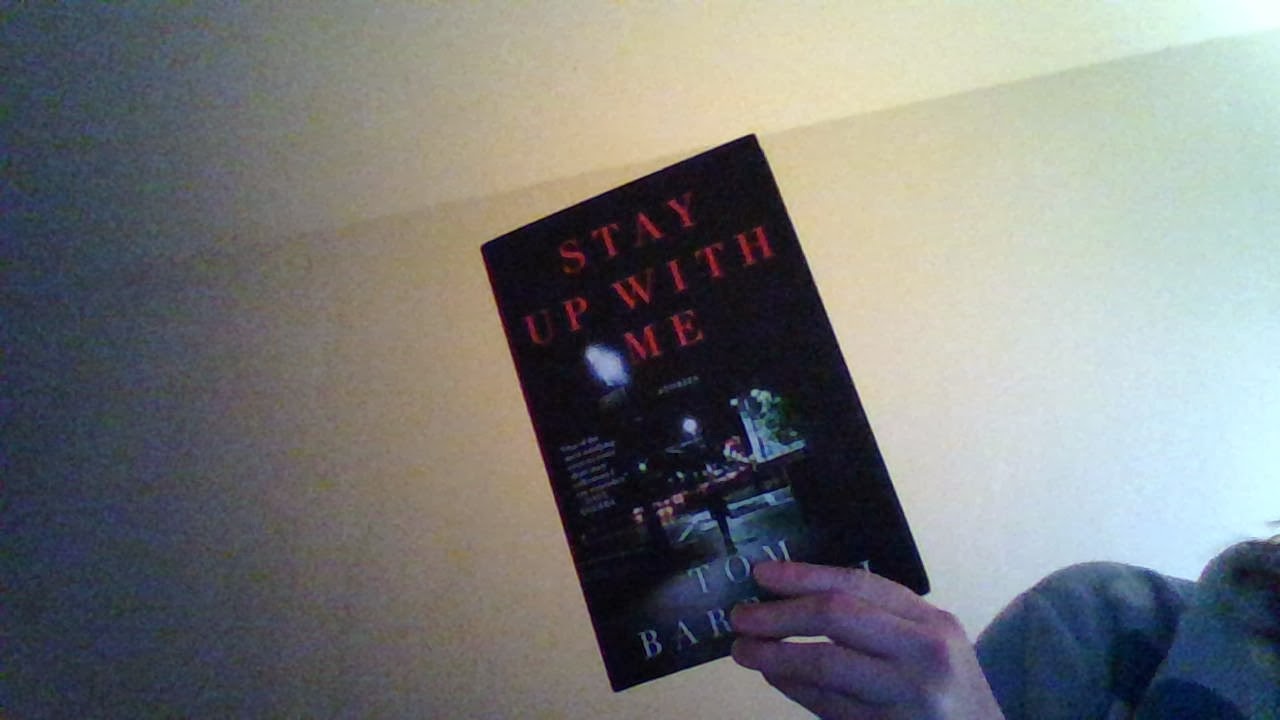
Book: Stay Up With Me

Author: Tom Barbash

Published: 2013 (Ecco)

Pages: 209

These are the kind of short stories that are gently told, filled with just enough human detail but maybe not enough weight to keep them anchored in my mind. They’re all about relationships, usually romantic and/or familial, and some of them take unusual settings like the inflating of the Macy’s Thanksgiving Day Parade balloons or regular feelings that are expressed as obsessions to sort of magnify the absurdity of the generality of sharing our lives with other people.
 

I liked them and I will bookshelf this, but I can’t say anything really stood out to me and I will probably end up re-reading this as a sort of baseline calming thing when I want to stabilize my own writing and/or dating life. People are weird.

A view from the other side


Book: Across the Pond: An Englishman’s View of America

Author: Terry Eagleton

Published: 2013 (W.W. Norton & Company)

Pages: 178

So I sort of fell off the “no new books until I’m done with the old” wagon. I went on another volunteer-credit-spending spree at the used bookstore, and then I went through all of the library’s New Releases posts  from April until the first week of December and made a list (in four parts of 50 each) of every book from those that I want to check out –

But hell, I figure if I only check out one library book at a time and keep the “bought” books in my car and don’t spent actual money until I am in fact done with the rest, I’ll be okay.

I’m telling you all this at the top of this book’s review because I’m procrastinating in telling you that there’s not a hell of a lot in here. It was a disappointing mishmash of vague philosophies that were both less humorous than I wanted them to be and less profound than the author meant them to be.
 

The normal gentle jabs are there: the accents, blind American optimism vs. dreary British pessimism, American tendency to let it all hang out in public vs. stifling British politeness, pride vs. self-effacement, etc. etc. Why don’t we enjoy a good teapot around here? (I do love my CVS electric kettle if that counts for anything.) Why can’t America shut up? Why can’t England stand up for itself more?

There are answers, well-sprinkled with vague irony, but none of it stirred much envy or patriotism or defensiveness or sudden understanding from me like I was hoping it would. I’m very curious about living in another country and especially the differences between countries that seem like they would naturally share and contrast a lot of small cultural details, but this book didn’t enlighten me very much.

Back to the library it goes. Crossing one off the list (of two hundred…sigh. I was doing so well for like three months there, right?).