Sunday, December 29, 2013

A really nice surprise


Book: Someone

Author: Alice McDermott

Published: 2013 (Farrar, Straus, and Grioux)

Pages: 232

You guys! I was so worried about this book, so worried it was going to be so boring and so stuffed full of sentimental clichés of a sweet old lady looking fondly back on her life, and it totally wasn’t and she didn’t even bother with a framing device and just dove right in to her Brooklyn childhood and it was so full of human details and joys and sorrows of her first love and growing up and her big brother’s decline and her more gradual realization that maybe he’s gay and oh, it was such a breath of fresh writing about a very worn subject that it made the days I was reading it better.

I love when that happens. Bookshelf!
 

Fleeting humanity


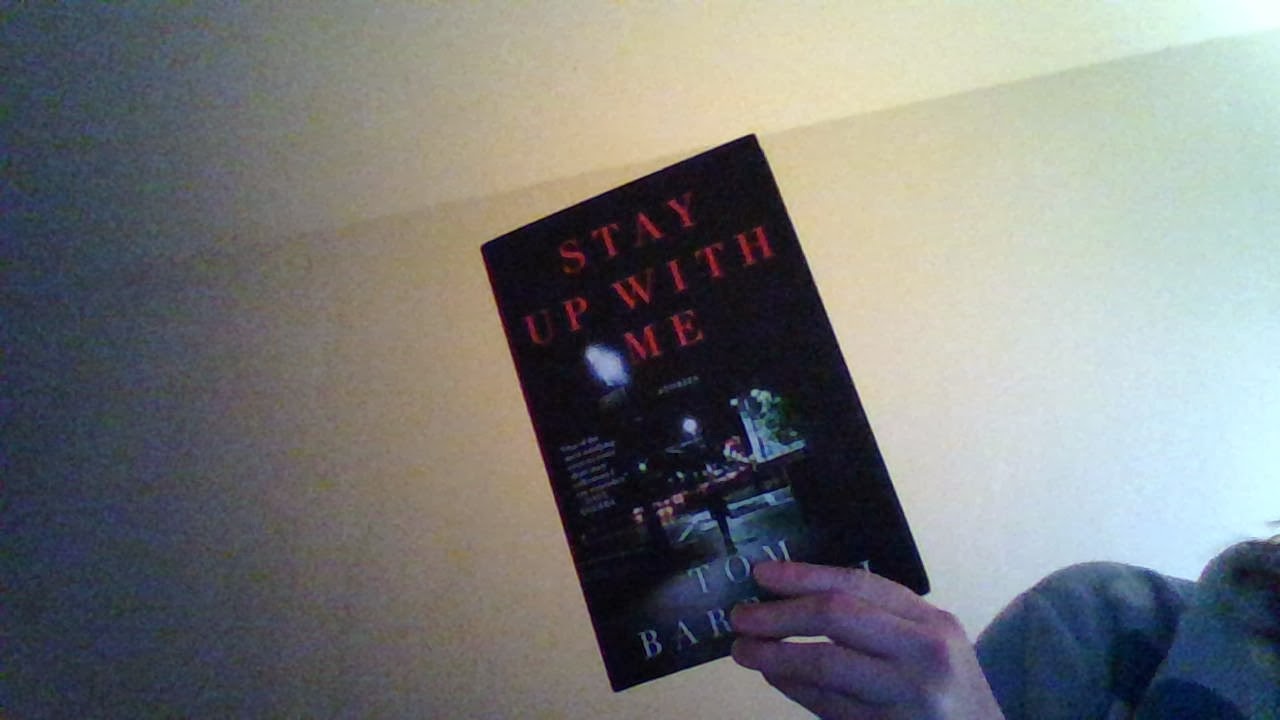
Book: Stay Up With Me

Author: Tom Barbash

Published: 2013 (Ecco)

Pages: 209

These are the kind of short stories that are gently told, filled with just enough human detail but maybe not enough weight to keep them anchored in my mind. They’re all about relationships, usually romantic and/or familial, and some of them take unusual settings like the inflating of the Macy’s Thanksgiving Day Parade balloons or regular feelings that are expressed as obsessions to sort of magnify the absurdity of the generality of sharing our lives with other people.
 

I liked them and I will bookshelf this, but I can’t say anything really stood out to me and I will probably end up re-reading this as a sort of baseline calming thing when I want to stabilize my own writing and/or dating life. People are weird.

A view from the other side


Book: Across the Pond: An Englishman’s View of America

Author: Terry Eagleton

Published: 2013 (W.W. Norton & Company)

Pages: 178

So I sort of fell off the “no new books until I’m done with the old” wagon. I went on another volunteer-credit-spending spree at the used bookstore, and then I went through all of the library’s New Releases posts  from April until the first week of December and made a list (in four parts of 50 each) of every book from those that I want to check out –

But hell, I figure if I only check out one library book at a time and keep the “bought” books in my car and don’t spent actual money until I am in fact done with the rest, I’ll be okay.

I’m telling you all this at the top of this book’s review because I’m procrastinating in telling you that there’s not a hell of a lot in here. It was a disappointing mishmash of vague philosophies that were both less humorous than I wanted them to be and less profound than the author meant them to be.
 

The normal gentle jabs are there: the accents, blind American optimism vs. dreary British pessimism, American tendency to let it all hang out in public vs. stifling British politeness, pride vs. self-effacement, etc. etc. Why don’t we enjoy a good teapot around here? (I do love my CVS electric kettle if that counts for anything.) Why can’t America shut up? Why can’t England stand up for itself more?

There are answers, well-sprinkled with vague irony, but none of it stirred much envy or patriotism or defensiveness or sudden understanding from me like I was hoping it would. I’m very curious about living in another country and especially the differences between countries that seem like they would naturally share and contrast a lot of small cultural details, but this book didn’t enlighten me very much.

Back to the library it goes. Crossing one off the list (of two hundred…sigh. I was doing so well for like three months there, right?).

Loosing God in the jungle


Book: Jesus Land

Author: Julia Scheeres

Published: 2005 (Counterpoint)

Pages: 355

This is a memoir of how a young (white) girl and one of her adopted (black) brothers were sent to a Christian boot camp in the Dominican Republic when they were teenagers to basically humiliate the Jesus back into them and the bad behavior out.

I put the kids’ races in parenthesis because while it’s not the central issue, it’s a very close second that affects their lives as they grow up in the Midwest. A lot of the story sets up their childhood and teen years, which is great because it shows how conflicted they were and how their militant parents took their kids’ fairly normal behavior for rebellion that had to be quashed.

Their older brother was in fact a bad kid, and although the argument could be made that he got that way from abandonment issues from his biological parents met by over-strictness from his adopted ones, I can’t have the sympathy for him that I have for the younger siblings because the older brother sexually abuses the sister for most of her teenage years.
 

When she and her younger brother start their own misbehavior, like stealth drinking and smoking and hanging out with the weirdos at first because they’re the only ones who’ll accept them but staying because they get hooked on the stuff they do, I find it really interesting that the girl makes casual mentions of still believing in God and worrying about what he thinks of all of it.

But most of that vanishes into the jungle haze when her younger brother is shipped off and she takes the chance to join him after she’s caught at some juvenile delinquency. The camp is strict and hypocritical and demeaning, and most of the kids there pretend and tattle their way through levels of responsibility and privilege until it’s decided they’re done. It’s not overly shocking, but it’s bad, but the camp never does get closed down and eventually the lady re-visits the campus as a journalist and gets no more answers than she did as an attendee.

It was a good clear read. She’s got a handle on her teenage emotions and how those extremes made the camp feel even more like a prison than it already objectively was and how her upbringing blew up her discretions into things she could barely ever make up for and how that drove her deeper into more dangerous behavior because why not when you’re already not going to be forgiven, right, and her slow realization that this wasn’t normal and that she could run away to something that was.

Bookshelf. 


The librarians defend the town!


Book: The Facades

Author: Eric Lundgren

Published: 2013 (Overlook Duckworth)

Pages: 215

There are two stories going on in this novel, one about an unreliable narrator trying to find his opera singer wife who disappeared on him and one about a town slowly going crazy through the buildings of its quirky founding architect. They are supposed to tie into each other, but they don’t, not nearly enough, so I’m left wondering exactly what was the point of all I just read.
 

I’m keeping this book because the librarians band together in an impromptu militant stand against the mayor who wants to tear down the town library and because of the gradual reveal of the lady’s real disappearance at the end, not because this book makes a whole lot of sense.

Bookshelf none the less.


Falling asleep at the gun


Book: The Little Sleep

Author: Paul Tremblay

Published: 2009 (Holt)

Pages: 268

A private eye who has narcolepsy and has to find out where compromising photos and a snuff film reel came from and in the process discovers really unsettling things about his dead and revered father. Go!


The narcolepsy is a good hook in theory, and it mostly works on the page except when it’s conveniently muddling the detection plot and also when the dude is whining about how much it messes up his life. Explanation is good, especially from the guy who experiences it, but holy crap, dude, we get that it sucks. Just tell us what you find.

It’s going for a sort of neo-noir and almost makes it, and it’s fun to read around the whiny bits, and I lost sense of the plot for a bit there but that might be because I don’t read a lot of detective novels so am rusty about keeping up with details. I did like the gradual reveal about his dad, though, and I appreciated that it wasn’t about a murder but was high enough stakes to maybe bring one about when discovered.

Also, pro tip to the Books a Million guy who was hovering near me when I picked this as part of an armful of bargain books to buy about a year ago: Never, ever say, “Are you going to read all those?” to me and my words. I very nearly dropped everything and walked out without buying just because you said that, because duh.

But I like this book more than the anger I felt, so I bought it and now, bookshelf.

Sunday, December 8, 2013

Working together to fight The Man

Book: Miss Anne in Harlem: The White Women of the Black Renaissance
Author: Carla Kaplan
Published: 2013 (Harper)
Pages: 343

So you want to fight for social justice, but right along with your family and own social circle thinking you're insane and probably sexually perverted in some way you haven't admitted yet, the people you want to help consider you a condescending outsider and accuse you of using them as a way to boost your own celebrity. What the hell are you supposed to do?


The white women activists who took part in the Harlem Renaissance of the early 20th century went in wildly different directions all the boost the same cause: racial equality and respect for the blossoming African-American contributions to the arts. Some mostly stayed out of scandal by supporting artists while staying the hell out of the spotlight as much as they could; some dove headfirst into interracial marriages, love affairs, and tabloid headlines. Probably the most transparent but also most reviled openly expressed their longings to appropriate this "exotic" culture for themselves, i.e., wrote poems about how they wished they were black and wrote plays they claimed to be all about the black experience and wanted everybody to go back to the "childlike wonder" of black people. So still racism, only weirder. 

Not everybody hated these ladies, of course, because that's yet another aspect of grouping "us" against "them" and generalizing for a whole bigass swatch of people who may or may not have anything in common beyond their skin color, and it certainly helped boost notice to black artists when they already had the backing (and money) of at least a little corner of the Establishment. But at the same time, this was when women were also getting patted on the head with an "Oh, she wants to help people! Isn't that cute!" so this book also doubles as an account of how two groups of minority voices joined together sometimes loud enough to actually get heard. 

It's pretty great. The first part is the best because it outlines the movement and white ladies' general roles in it. The second half of the book biographies (yeah, I totally just made that a verb) four or five ladies specifically, which I liked but also wanted to hear more about. There was this one lady who wore African bangles from her wrists to her elbows because she wanted to be a...look, guys, I can't say either the proper or the slang version of the n-word. I have no rights whatsoever to that - and I don't think anybody ever settled the debate of "Is this racist?" (Although with 2013 mindset, the answer is usually, "Um. Yes.") 

Very solid research on a very obscure topic. Bookshelf!