Showing posts with label blank protagonists. Show all posts

Monday, August 20, 2012

I do not think that word means what you think it means.

Book: The Commoner

Author: John Burnham Schwartz

Published: 2008 (Doubleday)

Pages: 351


Slight confession--I'm trying to hack my way through a jungle of a hard sci fi collection, and the underbrush has swallowed me whole for about a month. It's made me too twitchy to deal with it AND real life at the same time. Last week I caved at the sight of the free book table in the Irmo branch library. FREE BOOKS, y'all. Free books that didn't try to explain string theory to me (well, not if I didn't want them to). 

I declared a break from the hard sci fi and dived right into my favorite subgenre of lit fic, the Cross-Cultural Relative and/or Significant Other Transplant. And I admit my opinion of this book might be colored by being my first gasp of familiar air in awhile, so I'll start by complaining.
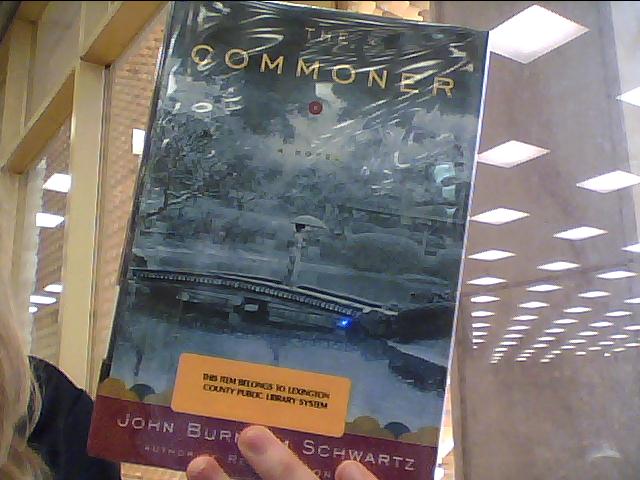


The main problem with The Commoner is how big a deal everyone makes about Crown Prince of Japan marrying a commoner...who is not actually nearly as far from his social strata as warrants that kind of implied gaspings behind fans. Haruko's a beautiful young girl from a family wealthy enough to send her to private school and let her play enough tennis to meet the Crown Prince and get in the orbit of his social circles like that. Guys, this isn't Cinderella. 

And the Crown Princes have traditionally chosen Princesses from finishing schools very similar to Haruko's, even if she's the first one from hers. She doesn't do any scheming except whaling him in tennis, on accident because her people are like, "Don't insult the dude who's lined up to rule us by beating him as a girl!"

I do love their courtship. Their phone calls are the only alone times they get and they're so awkward, just like normal people who want to say so much but don't know how. 

But once they get hitched, the narrative gets general to the point where it feels like listening to an older relative tell a story rather than like actually being in the daily action of Haruko trying to grasp the magnitude of her duties. Which, okay, all she really has to do is produce a male heir, but before she does that (quite easily, really), I wanted to see her stumble on ridiculous robes or accidentally pour tea on the wrong leaf or just screw up a bunch of minor court rules until she begins to find her own inner royal. Like the Princess Diaries with way more dignity and subcontext between the passive-aggressive complisults from her mother-in-law. Haruko does get reprimanded, and often, but we only hear about the generalities in a diary-type listing of what she did wrong and how she eventually managed to get better with, it's implied, not more and probably less of a problem than a real, used-to-farm-dirt commoner would've had.

It's still a cool story and would make a kick-ass story to hear from a great-aunt or grandma or someone unexpected, but there are way too many details left out to make it a compelling triumphant struggle or living slice of history.

Friday, June 15, 2012

And so we came to the end (of a series)

Book: Mockingjay

Author: Suzanne Collins

Published: 2010 (Scholastic)

Pages: 390

Let's get straight to the ending! That's all I ever wanted from this trilogy anyway.

I liked it. I thought it was mildly shocking in a way that made sense. I loved how it leaned hard on the theme of "who exactly is the bad guy here?" that this book spent like 300 pages developing. There were enough broad hints about SPOILER ALERT NO SERIOUSLY I AM ABOUT TO DESTROY ALL YOUR SURPRISES District 13 President Coin that Katniss shooting her instead of Snow was an inspired last-minute instinct.
But the lead-up to it reminded me of watching Doctor Who and noticing that they're just now getting into trouble when there's 10 minutes left in the episode. These storylines can go two ways: a rushed ending or a two-parter. Obviously the two-parter scenario is ideal because it means I have a built-in excuse to watch more Doctor Who, but Mockingjay made me considerably more nervous because there was for sure nothing else after I finished it.

And it manages to wrap up in a timely fashion by one of the most annoying tropes I've noticed in this series: Katniss getting seriously injured and whisked away to treatment in the middle of the action. She, and consequently we, hear about the most interesting bits of battles and such through second-hand pure exposition.
I thought the whole point of her being the Mockingjay was that she would be put in exactly the right place to witness and show everything as it was happening. I expect that from all my protagonists, guys.

I did love how the rebels were aware of and could use media manipulation just as well as the Capitol. That's been my favorite part of the series and really put the focus on the ambiguity of each side, like, if they use the same propaganda techniques--if they both use propaganda at all, how can we tell which side tells the truth? How can we tell if there's a truth at all? I totally couldn't, and I never fully trusted those District 13 bastards anyway.
But oh my god did I want there to be so much more of a psychological showdown with President Snow! He showed how good he is at being creepy with flowers--flowers, y'all! And then when Katniss didn't shoot him, I was all, "OH SNAP [regrettably, I really do say this out loud; am trying to train it out of myself] they're going to psyche each other out SO HARD for the COUNTRY!"

Nope. He dies choking and getting crushed like two minutes later, and she hears about this from...say it with me now...her hospital bed. 

Now we get to talk about Peeta and how every time I hear someone say his name out loud, I think of Elaine and her "Stellaaaaaaaah!" He felt plot-device-y in this one. And my apologies; I reread Catching Fire while waiting to borrow Mockingjay, and holy crap is there for sure some teen love angst going on there. I missed it because Collins is so dang good at plot. I forgive her so much for that. And honestly, Peeta and Katniss bonded in blood. Twice. They know the most horrible experiences of each others' lives, and they know what the other went through, and they know just exactly how much they both need a little peace. Gale sounds like he's hotter than Peeta, though.
So what'd you guys think of how this series ended? How'd you think the series worked as a whole?

Tuesday, April 24, 2012

How could you do this to me?


Book: The Love Eaters/The Kiss of Kin dual edition

Author: Mary Lee Settle

Published: 1954 and 1955 Harpers (original editions), 1995 University of South Carolina Press (dual edition)

Pages: 204 and 184, respectively (numbered separate in the volume)
 
These are technically two separate novels, but they both evoked the same dismal reaction out of me by both being about groups of people brought together by one event (a community play and a will reading), both throwing in one character with surprising secret relation to another (both are bastard sons who just came of age) who don’t actually stir the action any more than it would’ve boiled over if they weren’t there at all, and both being dialogue-heavy when all both of them boil down to is “HOW COULD YOU?” 


That is seriously all anyone says. These are the first two stories I’ve ever read that focuses on showing relationships between characters without getting into the characters themselves, like, at all. I had no idea that was possible to write. The author started out as a playwright, which reveals a reason for all this but doesn’t excuse it.
 
Both stories revolve relentlessly around the screechy, shallow aspects of human nature that I read to forget about, so I hated this book. It just reminded me how horrible people are when sexual and professional and inherited jealousy get the best of them. If I wanted 185 pages about that, I could just subscribe to Cosmo.

Saturday, January 14, 2012

Take it back.

Book: If Jack’s In Love

Author: Stephen Wetta

Published: 2011 (Amy Einhorn Books)

Pages: 354

The only reason any of these characters exist is to talk about each other in a judgey way. That includes the 12-year-old “genius” protagonist, quotes used because his smartypants qualifications are that he’s on the school honor roll. That’s IT, and it’s mentioned like twice as offhand remarks. Nowhere else is he mentioned doing or even caring about anything intellectual.

His brother may or may not have murdered a rival high schooler, by the way. BY THE WAY. Wetta gets the show/tell dynamic all wrong; he skims over the interesting scenes with bloodless narration only to zoom in on the most repetitive information drop conversations ever. His characters also slam in and out of southern dialect like the many-doored set of a stage farce. Also, there’s a Jewish jeweler who has magic rings, maybe, and is definitely way too interested in the protagonist’s physical progress with his grade-school girlfriend. The protagonist’s dad is thinking about robbing the jeweler’s store.

None of these plot threads come close to touching each other. It sort of reminds me of  the It’s Always Sunny in Philadelphia episode when Mac and Charlie go to a masked sex party only to find it full of disgusting people and they lost interest before everything comes together.  

In other words: I want my $12.50 back, Barnes and Noble. You. Me. Receipt. Monday. 


Monday, December 26, 2011

Healing story no. 1 billion and seven

Book: Left Neglected

Author: Lisa Genova

Published: 2011(Gallery Books)

Pages: 322

There’s a certain kind of matte-finished book jacket painted with still life that’s supposed to be vaguely symbolic of the story within but mostly reminds you of when your mother dragged you to a bunch of interior design stores because she was redecorating her living room and wanted your input. It’s generic trying to disguise itself as profound. In my experiences, these book jackets do their advertising jobs well; the stories tend toward premises that look cool but are slathered with all the intellectual complexity and emotional subtly of a Hallmark Channel movie.


That is how a book about a workaholic recovering from a rare brain disorder becomes boring.

Left neglect is where a person ignores the left side of their world because a part of their right brain is damaged. Fascinating, right? And rare, and rich with weird physical and psychological challenges, right? Not according to this account of an overworked mom who prattles on about her busy by reciting from a big business trope list without bothering to add her personal details. When she gets into a car accident that literally slows her down to about a quarter of her normal speed, the author lapses into healing family clichés about staying slowed down for good.

I just…y’all, these books wear me out. They make me feel guilty for wanting a sick person to be much more interesting, then they make me question my guilt issues because I’m feeling guilty about a fictional character, then they make me reassert my true hatred for said character because everything works out in the end because she willed it to be so through family rifts and financial crises that in any other universe would require more than her wanting to fully heal. It’s not that this isn’t realistic (although it isn’t). It’s that the dramatic obstacles melt like cotton candy, without any effort, and leave just as saccharine an aftertaste. I HATE cotton candy.


Points for the subtle title pun, though. 

Wednesday, November 23, 2011

KING WRITES WELL ABOUT TIME TRAVEL

Book: 11/22/63

Author: Stephen King

Pages: 842

Published: 2011 (Scribner)

Whatever else there is to say about him, Stephen King can tell a damn fine story when he concentrates and somebody gets brave enough to remind him that he still needs an editor. This book on time travel used to stop JFK’s assassination is proof I will drop upon his head if he ever lets something like Under the Dome out of his writing drawer again.

This one’s giant, meaty, compelling, and straightforward. Straightforward! In over 800 pages, he doesn’t make any unnecessary side trips, physical or philosophical, and the only reason I’m not calling that a miracle is because it didn’t feel miraculous. It felt—simple.

I won’t give away the whole plot since this is a brand-new book (for once), but basic outline: protagonist discovers a time travel portal in the back of his friend’s diner. It always leads to the same September morning in 1958. Diner owner uses it to buy meat super cheap and bring it back to the future. (One of my favorite details.) Diner guy is dying and wants protagonist to go prevent JFK’s assassination. Protagonist does and comes back to see how that’s affected 2011. Now between those last two sentences, add massive piles of well-intentioned lies, skipping towns, sporting bets, runs from the mob, using money to solve problems, murders, notes from the diner guy, shitty apartments, falling in love, sacrifices, consequences, Russian ex-pats, cigarette smoke, the Cuban Missile Crisis, blood, broken bones, and a past that DOES NOT want to be changed. Bam. You got yourself a long satisfying glut of Stephen King plotting.

His writing ticks (repetition, heavy reliance on exposition-tastic and unhumanly “hip” dialogue, overextended use of metaphor, defanged climax) are kept at a minimum, but he does do that thing where the protagonist is a bland everyman hero and the girl he falls in love with is even less sketched out. WHY AND HOW DO THEY LOVE EACH OTHER? I DON’T KNOW, and it’s the driving force for the novel’s full back half. Her major trait is she’s tall and clumsy and although she gets upset about the protagonist’s lies, she eventually just accepts him without any further explanation. I don’t know why she changed her mind. SHE doesn’t know why she changed her mind. Manic Pixie King Girl, right there.

And I so, so wish he would’ve written more deeply into a villain. He’s absolute best when he’s describing a psychopath unraveling. But from a characterization perspective, I do appreciate his ability to keep Lee Harvey Oswald a fully rounded human and not a cardboard holder of evil and guns.

It didn’t take me nearly as long as it should have to read this book because I kept wanting to know what happened, and the ending paid off my ignoring other things to read for a couple more hours. Which was awesome.    


Tuesday, September 27, 2011

Good writing, boring story

Book: Dicey’s Song

Author: Cynthia Voigt

Published: 1982 (Fawcett Juniper)

Pages: 211

There are two tags I expected to use for this post but didn’t: dysfunctional families and coming of age. You want to know why? Because I don’t believe in false advertising, unlike the blurb-writers on this book.

I guess you could argue that the dysfunctional family part is inherent in four siblings who have to find a place to live after their mother gets—too crazy? Too sick? Too crazy-sick? The narrative is never specific about that, and by the time this book starts Dicey and her sister and brothers are already settled at their grandmother’s.

But that’s just it; they’re settled. Their most traumatizing conflict is behind them, and in this book all they have to worry about is being too good to fight on the bus and waiting for the smart brother to figure out how to teach them to read and letting the sassy popular girl in their English class convince the teacher they didn’t plagiarize their super good essay and finding the $500 their piano teacher cum family friend slipped them for a trip to visit their mother who dies and needs to be cremated.

It’s an interesting setup of real-life problems (I was for serious worried about what they were going to do with their mom when she died and the undertaker told them it would be $750 they most certainly did not have for a burial) that each get solved within fifty pages or so, staggered so not everybody’s made happy at the same time but they definitely all are by the end. There’s nothing truly at stake; even if they fail, their grandma won’t let them back into the real hardships of their earlier life.

And the coming of age part was going to be a sort of automatic thing because Dicey, the oldest, is thirteen, and what the hell else do you do at thirteen, especially if you’ve been in charge of your ad-hoc family until you show up at your grandma’s?

But Dicey’s such a blank character. I accept the fact that her life has made her brusque and practical, but I refuse to believe that she doesn’t have even half a speck of the imagination or rebellion that makes teenage characters so interesting. She doesn’t change at all; the world around her just starts telling her how good she is.

All that being said, this book was very well-written, just the perfect balance between understated prose and decorative language that exactly explained abstract thoughts and feelings. I read it fast because I remained convinced that there was a better story released in the next chapter.        

Also, this is “a Tillerman Family Novel,” according to the cover. This is a SAGA, folks. I bet the first couple books are more interesting. I trust Voigt to handle melodrama with just the right touch.