Showing posts with label free. Show all posts

Monday, August 20, 2012

I do not think that word means what you think it means.

Book: The Commoner

Author: John Burnham Schwartz

Published: 2008 (Doubleday)

Pages: 351


Slight confession--I'm trying to hack my way through a jungle of a hard sci fi collection, and the underbrush has swallowed me whole for about a month. It's made me too twitchy to deal with it AND real life at the same time. Last week I caved at the sight of the free book table in the Irmo branch library. FREE BOOKS, y'all. Free books that didn't try to explain string theory to me (well, not if I didn't want them to). 

I declared a break from the hard sci fi and dived right into my favorite subgenre of lit fic, the Cross-Cultural Relative and/or Significant Other Transplant. And I admit my opinion of this book might be colored by being my first gasp of familiar air in awhile, so I'll start by complaining.
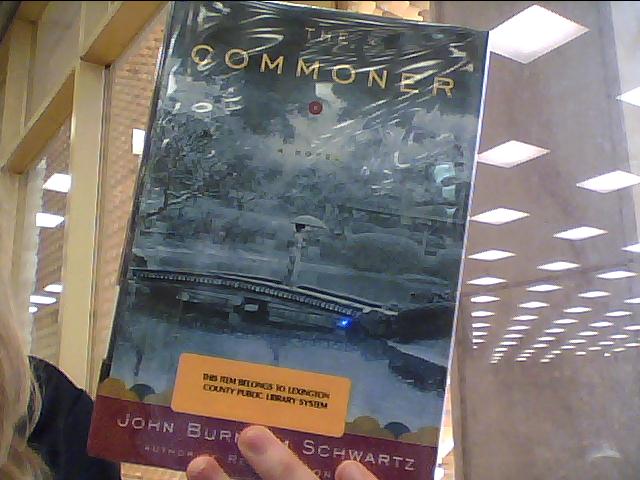


The main problem with The Commoner is how big a deal everyone makes about Crown Prince of Japan marrying a commoner...who is not actually nearly as far from his social strata as warrants that kind of implied gaspings behind fans. Haruko's a beautiful young girl from a family wealthy enough to send her to private school and let her play enough tennis to meet the Crown Prince and get in the orbit of his social circles like that. Guys, this isn't Cinderella. 

And the Crown Princes have traditionally chosen Princesses from finishing schools very similar to Haruko's, even if she's the first one from hers. She doesn't do any scheming except whaling him in tennis, on accident because her people are like, "Don't insult the dude who's lined up to rule us by beating him as a girl!"

I do love their courtship. Their phone calls are the only alone times they get and they're so awkward, just like normal people who want to say so much but don't know how. 

But once they get hitched, the narrative gets general to the point where it feels like listening to an older relative tell a story rather than like actually being in the daily action of Haruko trying to grasp the magnitude of her duties. Which, okay, all she really has to do is produce a male heir, but before she does that (quite easily, really), I wanted to see her stumble on ridiculous robes or accidentally pour tea on the wrong leaf or just screw up a bunch of minor court rules until she begins to find her own inner royal. Like the Princess Diaries with way more dignity and subcontext between the passive-aggressive complisults from her mother-in-law. Haruko does get reprimanded, and often, but we only hear about the generalities in a diary-type listing of what she did wrong and how she eventually managed to get better with, it's implied, not more and probably less of a problem than a real, used-to-farm-dirt commoner would've had.

It's still a cool story and would make a kick-ass story to hear from a great-aunt or grandma or someone unexpected, but there are way too many details left out to make it a compelling triumphant struggle or living slice of history.

Friday, December 23, 2011

German angst on art and beauty

Book: Death in Venice and Other Stories


Author: Thomas Mann


Published: 1988 (Bantam, this collection); 1897-1912 (original story publication dates)


Pages: 263


Hoo, boy, does Thomas Mann ever have conflicting issues with his chosen profession.

He's this great chatty German with a keen sense of existential dread and how beauty (and lust disguised as high-minded appreciation of it) can wreck an artist especially easily. His character-to-character dialogue has that real-life rhythmic panic of "Oh fuck how much of what I actually feel should I say?", which is not something I expect to come across so clearly from a pre-modern writer. Snaps for him.


Or maybe his 1988 translator. That's a problem I have with translation; how much of the text is lost when it jumps languages? Witness Kafka's "bug" vs. "cockroach" vs. "vermin" opening. Maybe I should just learn German? 


But then I'd be the shitty translator and have no one to complain about but myself, and as Mann proves in his giant blocks of monologue on the nature of Art and the Writer's Role in it all, that is some boring-ass prose. It stops his narratives dead until the hunchback re-meets the lady who makes him feel the pang of being an outcast, or until the shopkeeper yells at the religious dude to stop waving that knife around because that won't make him take the obscene picture out of his shop window, or until the tubercular wife of a count stops playing the piano for a smitten writer. 


See? He's got some good stuff. You just have to get past his angst. I bet he was FUN when his writing was going badly.      

Sunday, November 27, 2011

Everything they say is true

Book: Twilight
Author: Stephenie Meyer
Published: 2005 (Little, Brown and Company)
Pages: 498
This isn’t going to shed any new light on this book, including the book cover, so I’m just gonna answer some lingering questions you might have. I do this all for y’all. And because I feel like it’s only proper to finally confirm what I’ve been bitching about for the last six years.
Is Bella Swan a weak, dependent, whiny, and self-absorbed Mary Sue written as an everyday tomboy who has an unspecified unjustified something about her that makes her amazing? Yes.
Is Edward Cullen a creepy overprotective stalker who’s supposed to be the ultimate romantic? Yes.
Does this book shit all over the traditional vampire legend by picking what it wants and laughing at the rest and adding sparkling skin, flawless hair, and unparalleled baseball abilities? Yes.
Was the writing clunky and melodramatic, like a novel someone wrote in high school? Yes.
Was the plot compelling, though? …Yes, dammit.    
Does it remind me of what my favorite high school teacher said about how he teaches Romeo and Juliet, “It’s a story about two stupid teenagers disguised as a great love story”? Yes. A thousand times yes.  

Is it worrying that this is the only thing a lot of young impressionable kids are reading nowadays? Yes and no. They should read other, better stuff, and lots of it, but if they don't life will soon enough prove that Edward 'n Bella aren't a healthy relationship. I wince for the day of reckoning but it'll happen. 

Thursday, October 27, 2011

Edible words

Book: Edible Stories

Author: Mark Kurlansky

Published: 2010 (Riverhead Books)

Pages: 265

Food is such a good revelation of our human natures because it’s a necessity that we can dress up to a luxury, the most raw biological process turned into high elaborate ceremony. Our relationships to it bring us together as cultures and push us apart into individuals as we make weird faces at our friends when they use too much ketchup on their fries. What, when, and how someone eats says a lot about them and their worldview. Also, a lot of it is delicious.

Kurlansky manages to wring some fleeting profundity from that line of thought in most of these stories. He uses recurring characters that slip and slide in and out of each other’s food lives to weave a sense of continuity that doesn’t stick well but provides nice consistent background in vignettes. The first one, about a guy who gets amnesia and loses his senses of smell and taste from falling in a hole, is my favorite. I like the semi-detached way his thought process is described and how it re-shapes his world from the inside out. In later stories, he ends up becoming a nationwide Food Network-type star and is scared to death that someone will find out his secret.

The story about a lady who goes to a Yankees game with her one-night stand and is bothered that he wants to eat a fancy spread he brought from home instead of ballpark hotdogs is interesting, too, but it never shows any glimpse of the absurdity that glimmers in unexpected but welcome places through the rest of the book.

The food is never as important as I think it will be in each story. I was hoping for more reliance on food as character building or explaining; but I wasn’t disappointed in the book as a whole. It was one of those books that in my head gets read by a soft, low voice with the slightest hint of a British accent. Translated into the real world that means I stayed pretty much interested the whole way through.

In this picture, the thing that looks like a hair is actually an antenna stuck to the sticky bit where the price sticker used to be. I finished this book the first night I spent in my new apartment and the first time I saw a bug in there, so, you know. Whap. 


Thursday, October 13, 2011

"A great girlfriend gift"

Book: Just Let Me Lie Down: Necessary Terms for the Half-Insane Working Mom

Author: Kristin van Ogtrop

Published: 2010 (Little, Brown and Company)

Pages: 259

Awe: the state in which I hold working parents. I have taken care of kids (daycare summer job) and am right now easing myself into a professional life; separately, each of those things have exhausted my punk ass to the point where I am really, sincerely, bewilderingly curious as to how the hell people do both at the same time without keeling over.

But: everything I’ve read about it has such a well-worn fondly crazy lightheartedness that I can’ tell what’s exaggerated for laughs and what’s damped down for sentiment. Van Ogtrop’s stories don’t go any deeper than the rest of them.

Can: it be something you just have to DO, like moving your legs when you want to learn how to run, or when you discover that nobody actually knows how to be an official adult and everyone just b.s.es their way into it until something clicks?

Does: the blurb that says “The ideal girlfriend gift!” mean a great present for a significant other or something to give a female friend? Either way sounds a little insulting and presumptuous.

Everything: this does not make me want children. Like, at all. I’ll settle for cooing at them while their mothers are preoccupied, thanks, so maybe both of us can visit the other side of life for the brief second that will be all we need. Also, I wanna play with the Legos.


Monday, October 3, 2011

Lonely vs. alone

Book: The Late Bloomer’s Revolution

Author: Amy Cohen

Published: 2007 (Hyperion)

Pages: 288

Lonely and alone aren’t the same thing. I think people confuse them too much, especially in artistic depictions of normal life. People are social animals, right? So we’re all miserable when we have no one else around us, so for happy endings everyone has to be paired up with his or her sex of choice. Yes?

No, not really. Amy Cohen finally realizes that, and she made me cry while going through her process.

Really, it’s your standard woman-discovers-herself-through-dating-way-past-when-she-thought-she-would-be-settled-down arc, thrown together with learning how to ride a bike at age 35 and being okay when her fiancé left her because he didn’t want kids.


That was the ending. Her fiancé went to live on the opposite coast without her after she gave him an ultimatum: go and live without her or stay in New York with her. And it didn’t destroy her, and I wanted to shout this ending in Hollywood’s direction so maybe they’d get a good idea or two. Woman discovers hard but necessary decision actually makes her grow! Yes!

Her book made me cry because it made me think about what being lonely really means. It’s not something that can just magically go away with the addition of another warm body; she was loneliest when she was trying to make connections work with the wrong people. And that is just an awful feeling, this giant black hole that opens up in time and swallows everything until you’re exhausted and bored and have no idea what to do next so you don’t do anything, which makes it worse.

Cohen’s a writer good at setting up empathy by simply telling her story. She’s also wearing a tank top, jeans, and Converse in her author photo, so I feel like we’d get along. That means she’s done her job right.    

Sunday, October 2, 2011

Robots...

Book: The Destroyer #47: Dying Space

Author: Warren Murphy

Published: 1982 (Pinnacle Books)

Pages: 196

Can fun writing be automatically thought of as good because it makes the reading experience a pleasure, even if that pleasure is laughing hard at seriously-meant dialogue and plot twists?

I think there’s inherent value in something like that, mostly because this book kept me very amused for a couple hours. It’s pure paperback pulp about a missile-controlling robot that is accidentally brought to life by two garbage men. The robot skins (!) one of the garbage men and takes his form to stay unnoticed while he goes to destroy Remo, a wiseass assassin who…you know, I don’t know what Remo did to the robot to piss him off so much. It was covered in previous books.


Anyway, they all end up in Moscow so the robot can stop the Russians from firing a nuclear missile—at the moon. The moon. Not at anything more alarming. Which, to whatever astrophysicists are reading this to keep their minds off NASA, I know blowing up the moon would screw us over down here. But in an indirect way that I’m sure y’all could figure out how we could live with. In this book, Russia is just so jealous of the US’s moon-conquering abilities that it wants to destroy the moon so we won’t have anywhere else to expand our empire. It apparently never crosses their minds to blow up our direct, terrestrial, and no doubt much easier because much closer nerve systems of big cities on either of our coasts.

So that was dumb and took all the tension out of the final couple chapters, which were action-packed and included a drunk randy scientist trying to make up for her unappreciated habits by helping the robot she built and a Russian commander who likes the “kinky boom-boom” Remo apparently stumbled into when he was trying to escape her room.

Two women in power; both of their sexualities are used as jokes meant to break tension. At least they’re both brilliant (when a man isn’t around to make them feel good). Hmpht.

They don’t get to live happily ever after, either, but everybody else does except in the epilogue the robot comes back to life and resolves anew to kill Remo. Of course he does.    

Tuesday, September 27, 2011

Good writing, boring story

Book: Dicey’s Song

Author: Cynthia Voigt

Published: 1982 (Fawcett Juniper)

Pages: 211

There are two tags I expected to use for this post but didn’t: dysfunctional families and coming of age. You want to know why? Because I don’t believe in false advertising, unlike the blurb-writers on this book.

I guess you could argue that the dysfunctional family part is inherent in four siblings who have to find a place to live after their mother gets—too crazy? Too sick? Too crazy-sick? The narrative is never specific about that, and by the time this book starts Dicey and her sister and brothers are already settled at their grandmother’s.

But that’s just it; they’re settled. Their most traumatizing conflict is behind them, and in this book all they have to worry about is being too good to fight on the bus and waiting for the smart brother to figure out how to teach them to read and letting the sassy popular girl in their English class convince the teacher they didn’t plagiarize their super good essay and finding the $500 their piano teacher cum family friend slipped them for a trip to visit their mother who dies and needs to be cremated.

It’s an interesting setup of real-life problems (I was for serious worried about what they were going to do with their mom when she died and the undertaker told them it would be $750 they most certainly did not have for a burial) that each get solved within fifty pages or so, staggered so not everybody’s made happy at the same time but they definitely all are by the end. There’s nothing truly at stake; even if they fail, their grandma won’t let them back into the real hardships of their earlier life.

And the coming of age part was going to be a sort of automatic thing because Dicey, the oldest, is thirteen, and what the hell else do you do at thirteen, especially if you’ve been in charge of your ad-hoc family until you show up at your grandma’s?

But Dicey’s such a blank character. I accept the fact that her life has made her brusque and practical, but I refuse to believe that she doesn’t have even half a speck of the imagination or rebellion that makes teenage characters so interesting. She doesn’t change at all; the world around her just starts telling her how good she is.

All that being said, this book was very well-written, just the perfect balance between understated prose and decorative language that exactly explained abstract thoughts and feelings. I read it fast because I remained convinced that there was a better story released in the next chapter.        

Also, this is “a Tillerman Family Novel,” according to the cover. This is a SAGA, folks. I bet the first couple books are more interesting. I trust Voigt to handle melodrama with just the right touch.


Sunday, September 25, 2011

It's everybody's fault

Book: Somebody Else’s Daughter

Author: Elizabeth Brundage

Pages: 338

Published: 2008 (Viking)

Somewhere (“way outside of Yonkers…”) there is a book jacket painted with an artistically blurred family portrait of a mom and dad and baby girl in which only the little girl’s face is completely in focus, or a book jacket painted with a stark bloody picture of a murdered hooker in a plaid skirt propped up against a tree with snow getting in her hair. Either would fit this story about a small private school community that basically gets ripped apart when all the grownups around can’t contain their secrets (money and a wife from the porn industry, a not-really-accidental murder at the last school they headed, eating disorders, general paranoia).


And the new writing teacher gets swept up in everything as the biological dad of Willa (one of the school girls) who takes this job because he wants to see how his daughter is doing in her adopted family. He hasn’t seen Willa since he and his drug-addict wife gave up Willa at her birth, and nobody knows who he really is for 99% of the book. He’s just kinda there, hanging out and teaching and reading her writing class journal and trying to make sure she doesn’t get into trouble in as discreet a way as he can. That’s, um, sweet? Or creepy, maybe? A little?

I don’t like how this book is written: third person omniscient that gives away all the secrets in blobs of thought-exposition before any of it has a chance to make for real dramatic tension. It decentralizes the plot to the point where I was reading about how the headmaster was the one who murdered a hooker because she was pregnant from him and I was going, “So, this? This is what everything’s supposed to lead to, right? Dead hooker usually automatically indicates climax in a community melodrama, so…I’m going with yes.”

I don’t like the character growth, either. When I first met them, the characters seemed promising: an adopted girl who’s got a great life but is starting to get uneasy enough to explore her identity through sex and her biological roots; a liberal sculptor of a mom who will have to mold her son a little more than she wants to so they can both survive the school year; a porn producer father and husband who’s starting to feel extreme guilt about how he makes his family’s money; an angry young girl who doesn’t know how to deal with her anger or sideline status and starts lashing out.

But do any of them do things that make character sense after the shit starts going down? NOT REALLY, NO.

What especially bothered me, like, took me out of the story bothered me, was the “conversation” the adults had the first night they met. They were basically throwing around buzzwords about feminism without actually saying anything to each other, which would be fine except this was supposed to be a very revealing conversation, how they all got to know each other, because they never got together in groups larger than happily/transcendentally or unhappily/forcefully screwing couples for the rest of the book.

And, and—the porn guy starts off as super misogynistic, but that turns off abruptly and is never mentioned again when the sculptor lady starts an affair with him but then that just ends and dies as one of like five subplots (most of which are about sex or love) that only get mentioned when hookers aren’t getting murdered.

Sorry to dwell on that part, but I keep mentioning it to remind myself that it happened and was supposed to be dramatically important, because in all honesty there was no reason it should have been.  

Wednesday, September 21, 2011

Nobody expects the...you know...

Book: The Witch of Cologne

Author: Tobsha Learner

Pages: 462

Published: 2003 (HarperCollins)

Everybody in this book lives in terrible fear of the Spanish inquisition, especially the protagonist who is a Jewish midwife who dabbles in kabala just to make sure but only really believes in actual science that she had the balls to learn because she pretended to be a boy to get educated and then she turned out so awesome at it that nobody cares except the meany priests bent on revenge and power.

This is a very serious book that takes itself, True Love, and fighting for freedom very, very seriously. Its whole tone is covered in that layer of misty gravity historical novels seem to think they need to convey that this is some important shit going down. Look, lady, I can tell, not the least reason because you insist on telling me everything and showing me nothing (except sex scenes, which, I mean, good job on that part). You get inside everybody’s head, which would be awesome except that they’re all cardboard. It especially bugs me that Mary Sue and Mr. Too (not their real names), the protagonists, are portrayed as the only two enlightened enough to even consider that everyone is equal. All the other characters are like, “Scandal!” or at the least, with fond chuckles, “You crazy kids.”

I guess it is hard to portray how new the idea of equality was back then without American readers of today finding the arguments cartoonish and obvious. But I bet it’s not impossible. 

And I know it’s possible to portray all the devastation of a doomed romance without overwriting about souls and destiny and how unicorns fart rainbows when these two fornicate but only in secret because Society doesn’t want them to be together.   

Here’s a list of things I said out loud as I was plowing through this, in rough chronological order.
  • How’d she get such a good manicure in the German Jewish ghetto of the 1600s?
  • It’s a crime for a book with this cover to be SO BORING. (The plot gets better, though.)

  • “Speak plainly, Wilhelm, my gout has shortened my temper.” Ha. This. Do more of this.
  • Does one pronounce the city Cologne like the stuff men use to smell pretty cologne? Is that where that came from? Where’s the Wikipedias I left lying around here?
  • There was seriously someone called the Witchfinder General?
  • Besser tsu shtarben shtai’endik aider tsu leben oif di k’nien; better to die upright than to live on your knees. That is this book’s motto, right there.
  • I HATE WHEN AUTHORS GO, “blah blah was blah blah as if it were blah blah, as indeed it was.” IF IT WAS LIKE THAT JUST SAY SO. DON’T DOUBLE BACK ON YOUR METAPHORS. THEY WILL BITE YOU IN THE ASS FOR THAT.
  • Her “nether hole.” Um. Is that…the, ah, female opening designed for sex, or does that mean—okay, I can’t tell from this scene and am just going to move on. She had a good time, anyway.
  • Of course she’s pregnant. (Not related to above scene. Different lady.)
  • And—wait, he actually DIES on the rack? Huh. That works for the narrative. Yay, no last-minute saving bullshit.

Terrible things. Happen to saintly people. Another one. Okay, it’s symbolic corn-punching time. *rolls up sleeves*